


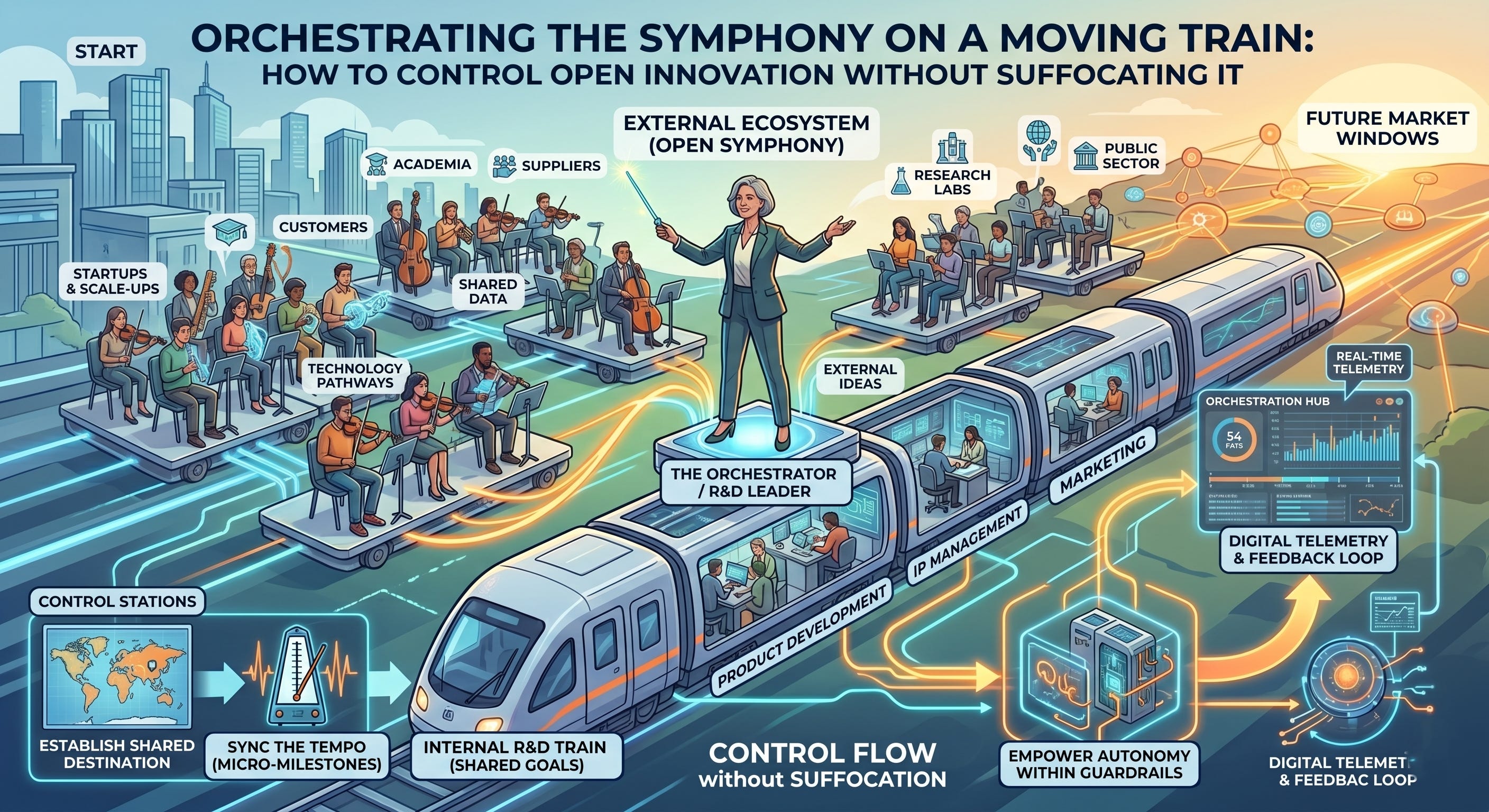
Every R&D leader chases the same holy grail: tapping into external innovation ecosystems without losing the strategic steering wheel. We want the agility of open collaboration, but we dread the chaotic loss of control.
In Open Innovation (Part 1): The Mindset Shift, we unpacked why the best contracts in the world won’t save you if your culture is closed. We established that successful collaboration requires moving past the insular “not invented here” mentality.
But once you cross that cultural bridge, you run headfirst into a brutal operational reality. When collaborative projects get messy, leaders often default back to old habits—trying to lawyer their way into alignment. The root cause of these failures isn’t a weak contract; it is a fundamental misunderstanding of trust.
We tend to treat trust as a single, uniform currency. In reality, a modern open innovation ecosystem requires managing three entirely different psychological contracts. If you try to run a hyper-speed ecosystem partner using the rules of a legacy joint venture, the engine will stall.
To build an operating model that actually delivers, you have to decode the three distinct types of trust operating inside your pipeline.
The Trust Triad: Not All Alliances Are Created Equal
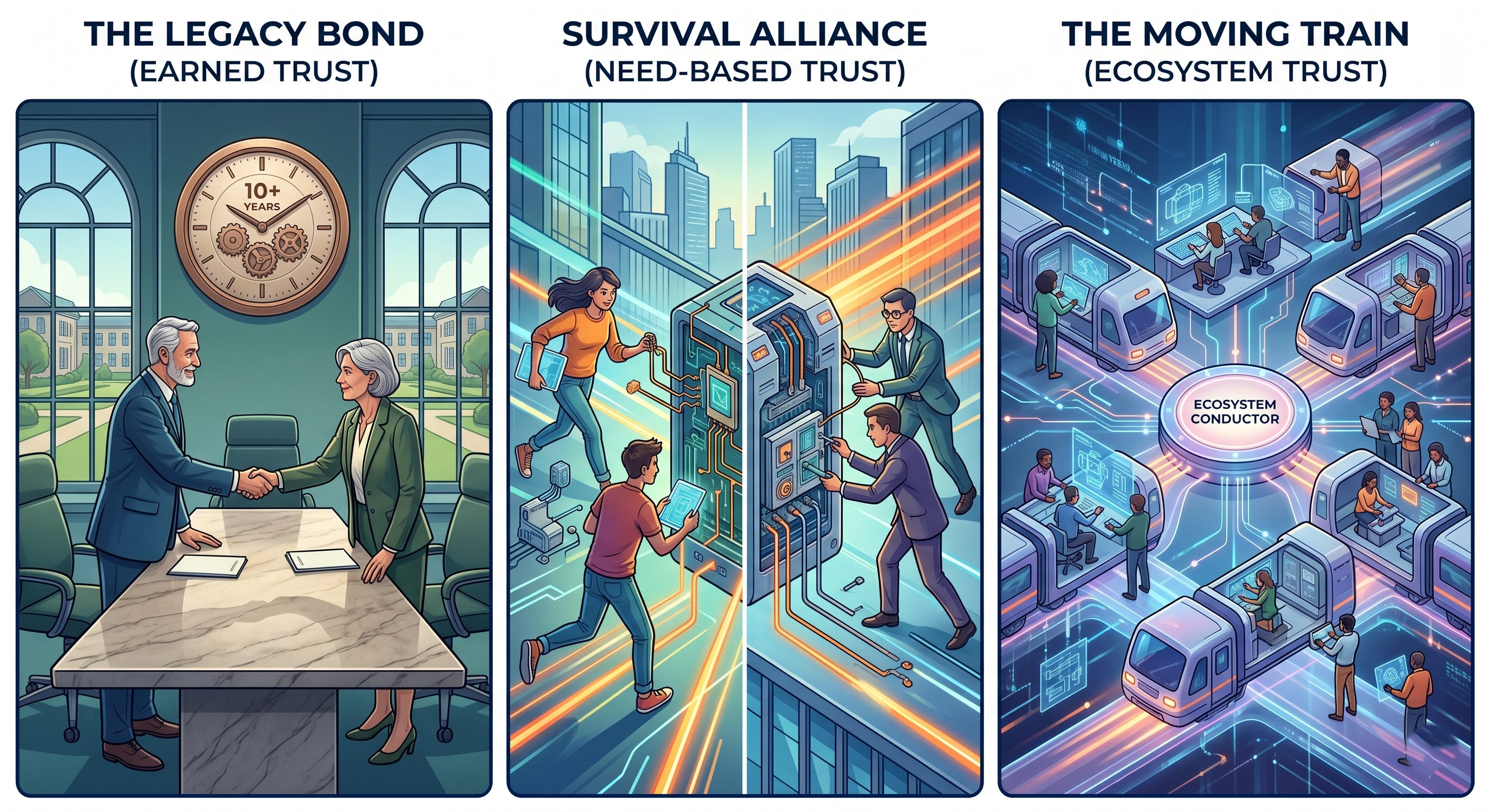
  [ THE LEGACY BOND ]  --->  Slow, Curated, Predictable (10+ Years)
  [ SURVIVAL ALLIANCE ] --->  Fast, High-Risk, Urgent (Startup/Scaleup)
  [ THE MOVING TRAIN ]  --->  Hyper-Complex, Multi-Partner, Zero Time
1. The Legacy Bond (Earned Trust)
The Vibe: Slow, curated, and comfortable.
How it works: This is the trust you’ve meticulously built with a core partner over the last 10–15 years. It’s earned through consistent outcomes, survived corporate cycles, and predictable timelines. You know their structural flaws; they know your corporate quirks. It feels safe.
The Catch: It breeds complacency. Legacy trust is comforting, but it rarely moves fast enough to catch a disruptive market wave.
2. The Survival Alliance (Need-Based Trust)
The Vibe: “You have what I miss, let’s survive together.”
How it works: Many R&D leaders experience this through smaller startup acquisitions or niche technology integrations. It’s born out of immediate necessity. Speed is high, resources are tight, and you trust each other because you absolutely have to in order to scale the asset before the market window closes.
The Catch: It’s fragile. If the immediate operational need shifts before the relationship is institutionalized, the alliance cracks.
3. The Moving Train (Ecosystem Trust)
The Vibe: High complexity, massive scale, zero time.
The Challenge: This is the new reality. Business needs demand that we execute complex design projects within a brand-new partner ecosystem. You don’t have 10 years to build trust, and you aren’t just buying a startup—you’re orchestrating a symphony while the concert has already started, the stage is moving, and the audience is watching.
The Blueprint: Keeping Control on “The Moving Train”
When you are forced onto The Moving Train, traditional command-and-control operating models fail. If you micromanage the ecosystem, you kill the speed you paired up for. If you let go entirely, you lose control of the intellectual property and strategic direction.
In Open Innovation (Part 2): From T&M to Shared Outcomes, we mapped out the structural blueprint for an engagement model that scales. We looked at shifting from transactional Time & Materials frameworks to shared risk and rewards.
Building on that structural architecture, keeping control of a multi-partner ecosystem requires three core mechanics:
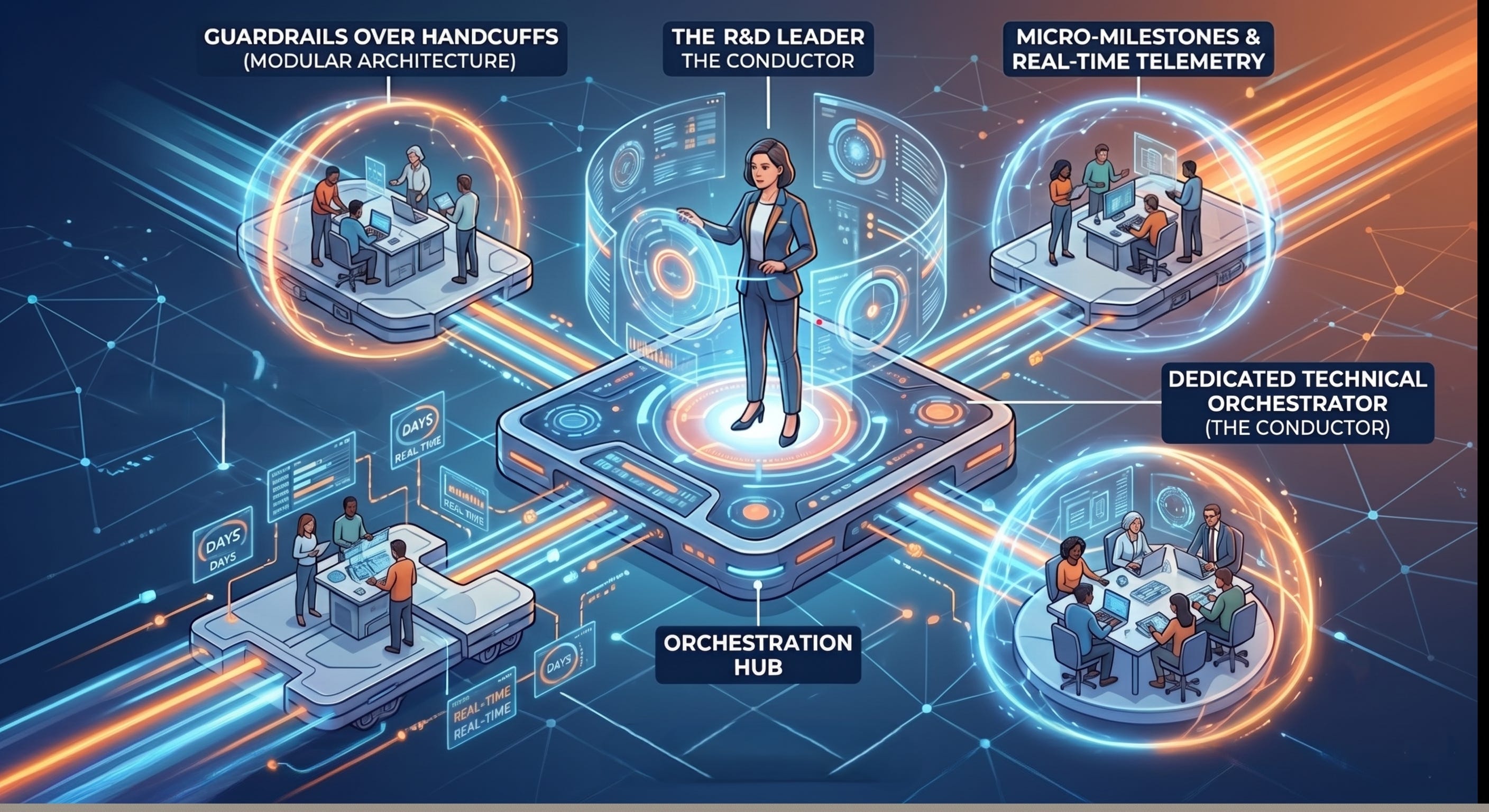
Guardrails over Handcuffs (Modular Architecture)
Do not try to force external ecosystem partners to adopt your internal corporate bureaucracy. Instead, establish rigid, non-negotiable data boundaries and IP interfaces (the “what”), but give them absolute autonomy over their internal development execution (the “how”).
Micro-Milestones and Real-Time Telemetry
Ecosystem trust requires visible velocity. Because you cannot rely on a decade of history, you must rely on real-time data. Replace heavy, monthly steering committees with digitized, lightweight micro-milestones. If a partner is slipping on a complex design project, your operating model must surface that telemetry in days, not quarters, allowing for collaborative course-correction.
Appoint an Internal “Conductor”
The ultimate operational failure is treating an ecosystem partner like a traditional vendor managed via a procurement portal. Complex, open ecosystems require a dedicated internal technical orchestrator. This “Conductor” bridges the gap, translating corporate strategic intent into partner action and ensuring that every instrument in the multi-party orchestra plays in the same key.
“You don’t build trust on a moving train by slowing down; you build it by ensuring everyone is perfectly synchronized to the same speed.”
The companies that dominate this decade won’t necessarily be the ones with the largest internal R&D budgets. They will be the organizations that master ecosystem orchestration—knowing exactly when to lean on a comfortable legacy bond, when to leverage a survival alliance, and how to command the chaos of the moving train.
The "Conductor" mechanic is the part most operating models quietly skip, and it's usually where the train derails. Procurement can manage a vendor. It cannot translate strategic intent into partner action in real time. That role is a technical orchestrator, not a contract owner, and the distinction matters.
What resonates most is your framing of trust as three different psychological contracts rather than one currency. So many ecosystem failures are really just a category error: leaders applying Legacy Bond patience to a Moving Train problem, then blaming the contract when the engine stalls.
I'd add one thing from the field: the telemetry only works if the micro-milestones are co-authored. If the "what" boundaries are set unilaterally, partners optimize to the dashboard instead of the outcome, and you get visible velocity toward the wrong destination. Guardrails earn autonomy only when both sides believe in the guardrail.
Sharp piece Ashwani. Looking forward to where you take the orchestration model next.