


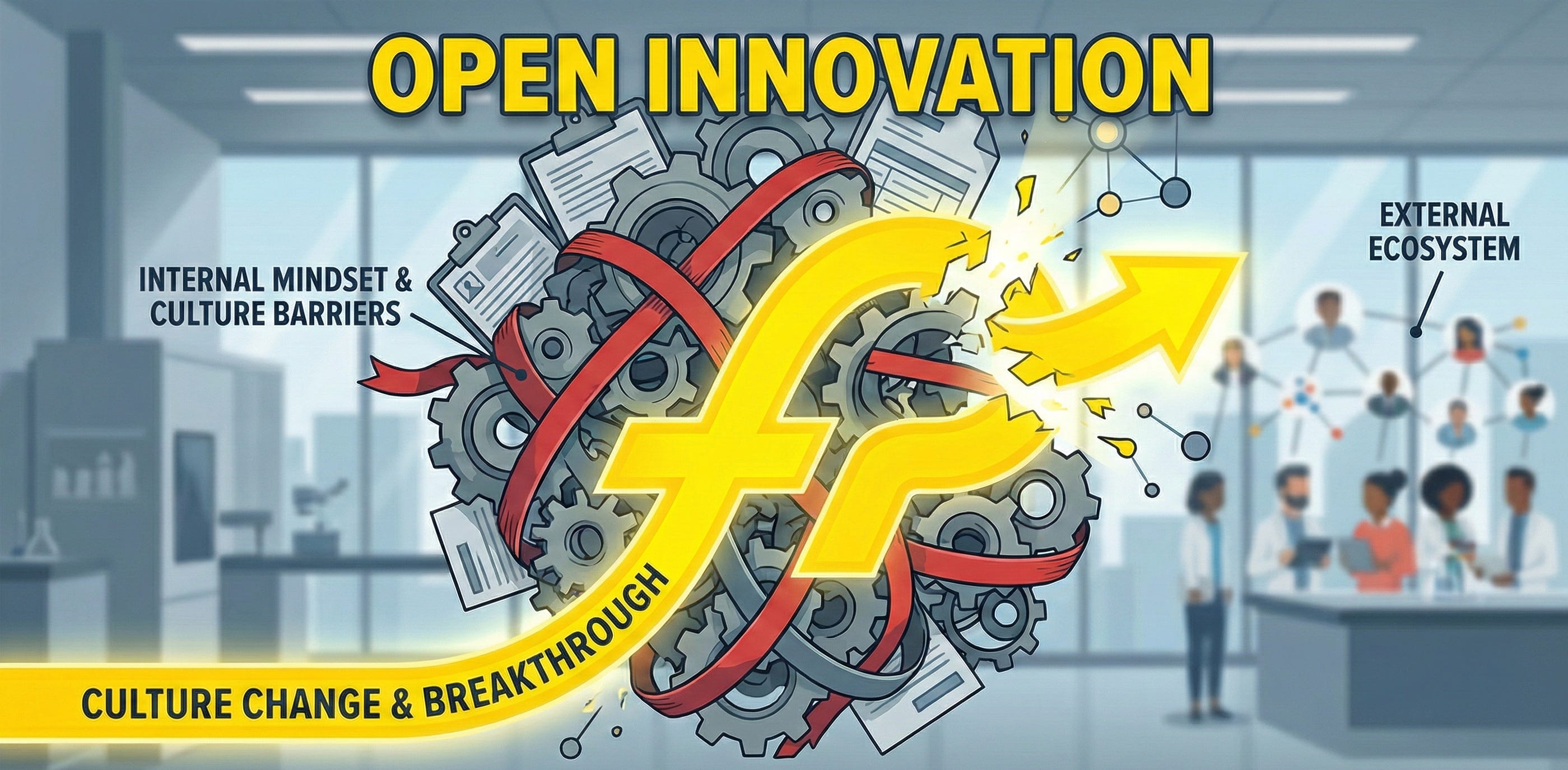
In corporate R&D, we spend an agonizing amount of time on the paperwork of partnership.
We debate the engagement models. We obsess over project planning and rigid deliverable definitions. We draft the Statement of Work (SOW) down to the last detail. We negotiate the rates with engineering service providers and define the IP boundaries.
When the contract is finally signed, we pat ourselves on the back, thinking we have successfully “deployed Open Innovation.”
We are wrong.
Signing the contract is only one part of the effort. The other part - the harder part - has nothing to do with the documents and everything to do with us.
I’m talking about Internal Mindset.
You can have the most detailed project plan in the world, but if your internal culture views the partners as “outsiders,” “competitors,” or “ticket-takers,” you are lighting money on fire.
The “Not Invented Here” Antibody
Innovation has an immune system. When we introduce external partners into a legacy R&D organization, the natural reaction of the internal team is often rejection. It’s not malicious; it’s human nature. It’s a mix of pride, protectionism, and a lack of trust.
This isn’t just my observation. It is the conclusion of the father of Open Innovation himself, Henry Chesbrough.
In his foundational 2003 MIT Sloan article, The Era of Open Innovation, Chesbrough declared the death of the “Closed Innovation” model—the old belief that “successful innovation requires control” and that “the smartest people in our field work for us.”
Most of us got that memo. We started signing partners.
But in his 2023 follow-up, Twenty Years of Open Innovation, Chesbrough dropped a harder truth: “The biggest barriers to successful open innovation are inside, not outside, the organization.”
He found that while companies became great at accessing external knowledge (Outside-In), they remained terrible at metabolizing it internally. The “Not Invented Here” syndrome didn’t die; it just went underground.
Reflecting on this, I realized that while we are often busy perfecting the commercial engagement models, we rarely apply the same rigor to the cultural engagement models.
Here are the four uncomfortable questions I keep asking myself—and I want you to ask your teams:
1. Can we admit that “smart” can live outside our walls? Chesbrough’s core premise is that “useful knowledge is widely distributed.” Can our people genuinely accept that? Or do we secretly believe that if we didn’t hire them, they can’t be that good?
2. Can we embrace shared ownership? I don’t mean “we tell them what to do, and they do it.” I mean true co-creation. Can we share the ownership of design, quality, and outcomes? If the product fails, do we blame “the vendor,” or do we accept we failed together?
3. Can our engineers follow an external lead? This is a big one. Can your internal engineers work effectively when an embedded Product Owner (PO) from a partner company provides the direction? Or does ego get in the way?
4. Can we let them into the strategy room? Do we keep our partners as purely operational executors (coding machines), or can we involve their leaders in our mid-level strategic discussions?
Why this matters (The 15M€ Proof)
These aren’t hypothetical questions. They stem from my experience in the field.
I have seen what happens when you get this right. In environments where we established true strategic partnership, I have seen small external teams—sometimes just a few engineers from a partner company—deliver massive results.
I’m talking about delivering SIL3 safety products (projects costing 15M€+) with full autonomy. I’ve seen external teams combine local embedded resources with larger offshore centers to move mountains.
But this only happened because they were treated as partners, not vendors.
The Leadership Shift: From “Taskmaster” to “Enabler”
So, how do we bridge this gap? It starts on Day 1, with the signal you send to your team.
Too many projects start with a “Taskmaster” mindset: “I will ask the partner to do X, Y, and Z, and then I will test it to see if they messed up.” This sets a tone of distrust and micromanagement before the kickoff meeting even happens.
We need to flip the script.
If we have done our job correctly during selection—choosing a partner not just on price, but on tangible outcomes, proven testimonials, and a rigorous gap analysis of their capabilities—then we must treat them as the experts they are. Don’t start the project by listing tasks. Start in “Full Enablement Mode.”
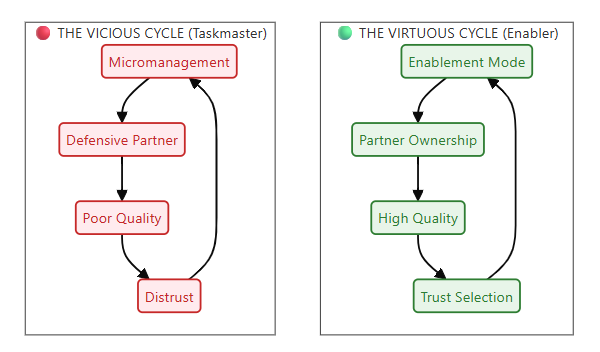
Often, when our internal experts raise concerns—saying things like, “They don’t understand our domain,” or “It’s too complex to be done by external partners”—they aren’t trying to be difficult. They are protecting the product. They are identifying genuine risks.
As leaders, our job is not to dismiss those risks, but to convert them into requirements.
My challenge to you is simple: When your team identifies a reason why an engagement might fail, validate their expertise, but pivot the question. Ask them: “What would you need to ensure it SUCCEEDS?”
Do they need better documentation? A week of on-site workshops to transfer knowledge?
By asking this, you move the team from a defensive posture to a design posture. You aren’t forcing them to accept a bad situation; you are empowering them to design a good one.
Shift the conversation from why we can’t to how we will. That is the Fast Path.
In Part 2, we will look at the structural side: How to build an engagement model that scales.
Absolutely. I’m fully aligned with this perspective: the real challenge isn’t the contract, it’s whether the organization can truly absorb external partners.
Shifting from control to genuine co-creation => real impact.