


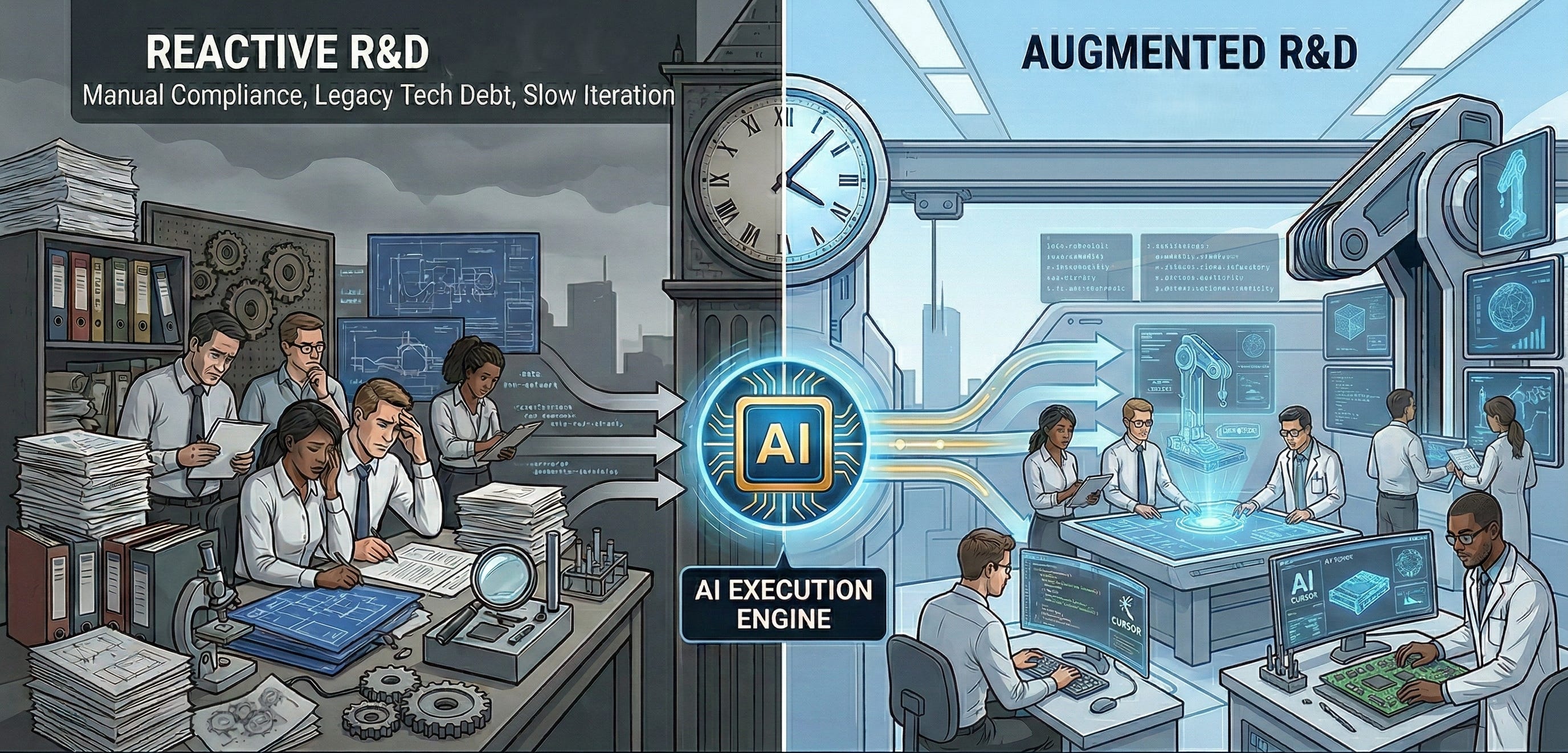
My journey into AI didn’t start in a boardroom; it started on the plant floor.
Managing projects with worldwide supply chains, I worked with factories built for scale—running at a pace that demanded perfection. We used computer vision to catch the “oops” before it shipped. That was my first experience with AI in the industry, more than 12 years ago. It was necessary, but it was reactive—a tax we paid for our own mistakes.
As I moved into leading R&D, the mission shifted. We moved beyond simple inspection and started embedding small ML models into sensing devices at the Edge. We gave our products the power to make local decisions, moving “Call for Action” and “Call for Maintenance” directly to the plant floor. I once worked on a project to predict the safe working period of a hoisting machine - leveraging predictive analytics to identify failure points well in advance, preempting hazards before they could compromise operator safety or site integrity.
But in 2026, the real game-changer isn’t just a smarter product. It is the AI Execution Engine behind the R&D itself. This is the “Fast Path” from concept to verified value.
The Legacy Knowledge Trap
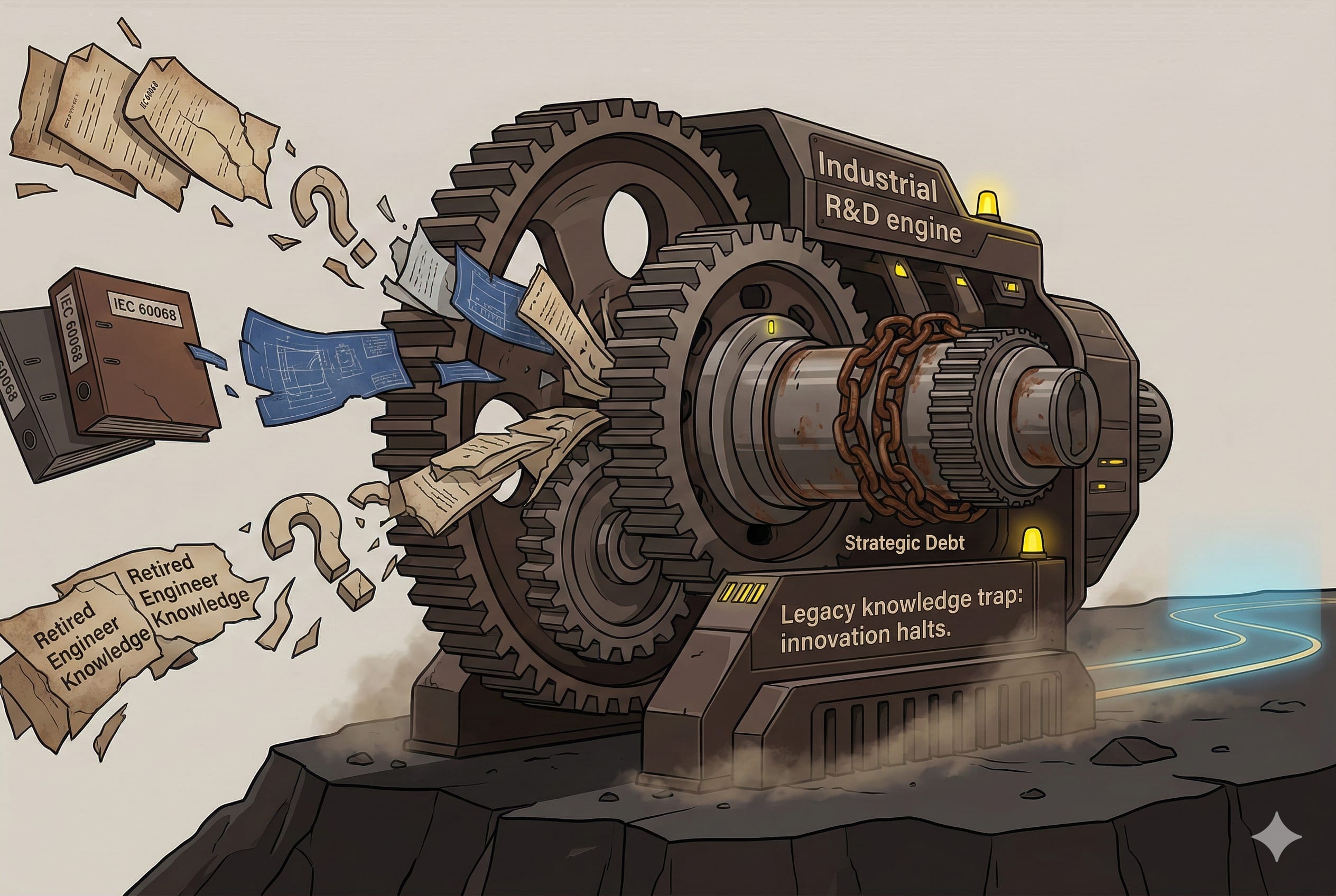
In industrial R&D, we manage products with lifecycles of 15–20 years and beyond. This longevity is a mark of quality, but it creates a massive strategic bottleneck: fragmented design knowledge. When a standard like IEC 60068 updates or a component becomes obsolete, the original design intent is often lost as personnel move on. This forces teams into:
Costly, manual impact assessments.
Redundant physical testing cycles.
A “Technical Debt” loop where we rebuild what we already own.
AI is shifting from a “feature” to the core engine of efficiency, but the transition requires a change in mindset from managing tasks to managing information flow.
Use Case 1: The Predictive Compliance Engine
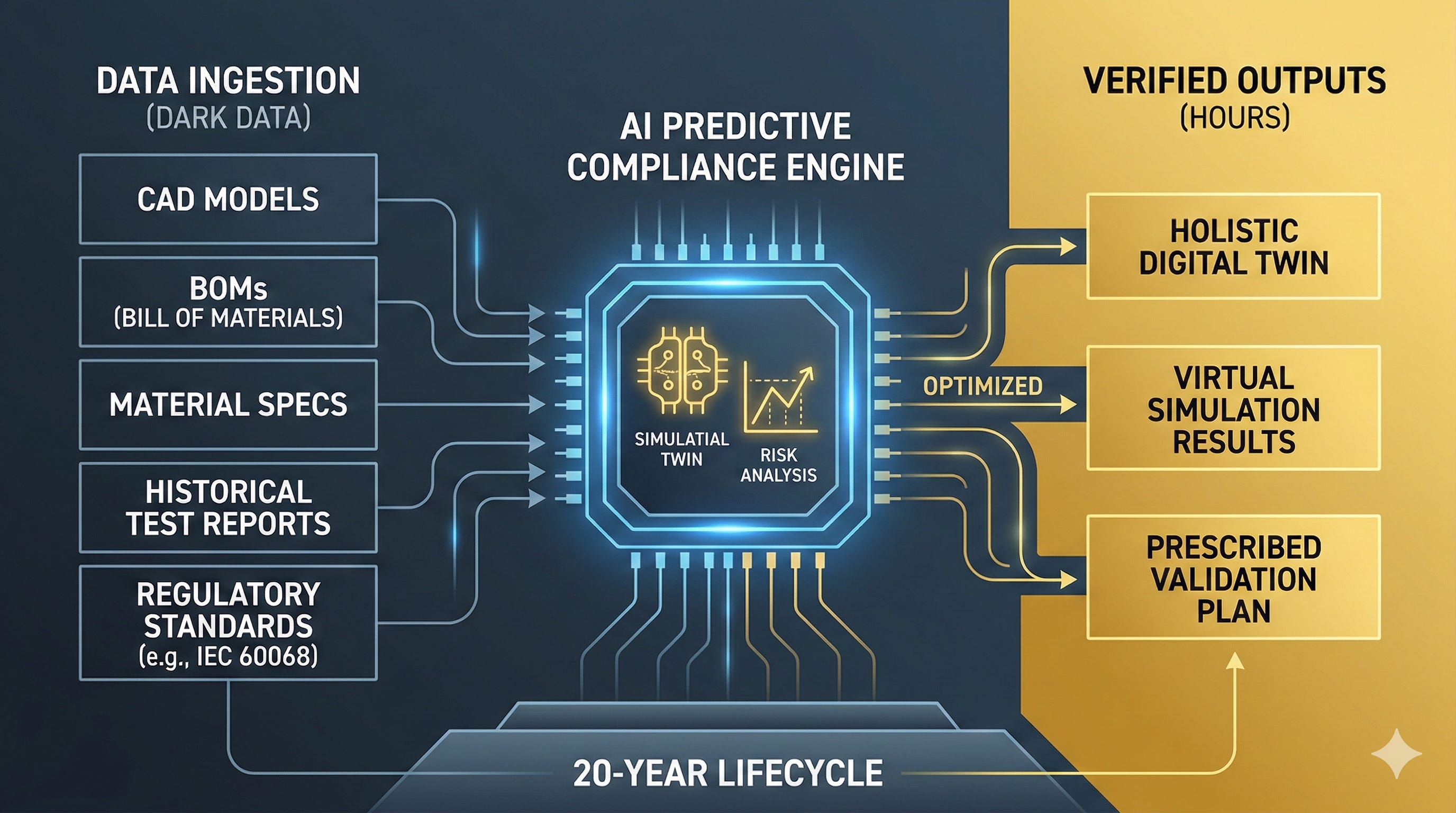
We are ready to move from a reactive burden to a proactive, data-driven approach by developing a Predictive Compliance Engine. This could be a centralized intelligence hub trained on design specifications, material properties, CAD models, and historical validation results.
.
Holistic Digital Twins: The engine will create a comprehensive compliance profile for every product in the portfolio.
Virtual Simulation: Instead of manual sifting, the engine virtually can simulate the impact of regulatory changes. A possible outcome is that teams can isolate exactly which physical tests actually need to be redone, potentially reducing laboratory overhead.
The “Expert Apprentice”: My hypothesis is that a junior engineer armed with this AI can identify a significant portion of compliance risks in a fraction of the time... The likely reality is that this empowers senior engineers to move from 'reviewing paperwork' to 'mentoring and high-level strategy.
Use Case 2: Autonomous Design & Prototyping
The “Fast Path” requires collapsing the latency between a concept and a physical prototype. In 2026, AI tools have moved from “assistants” to autonomous executors.
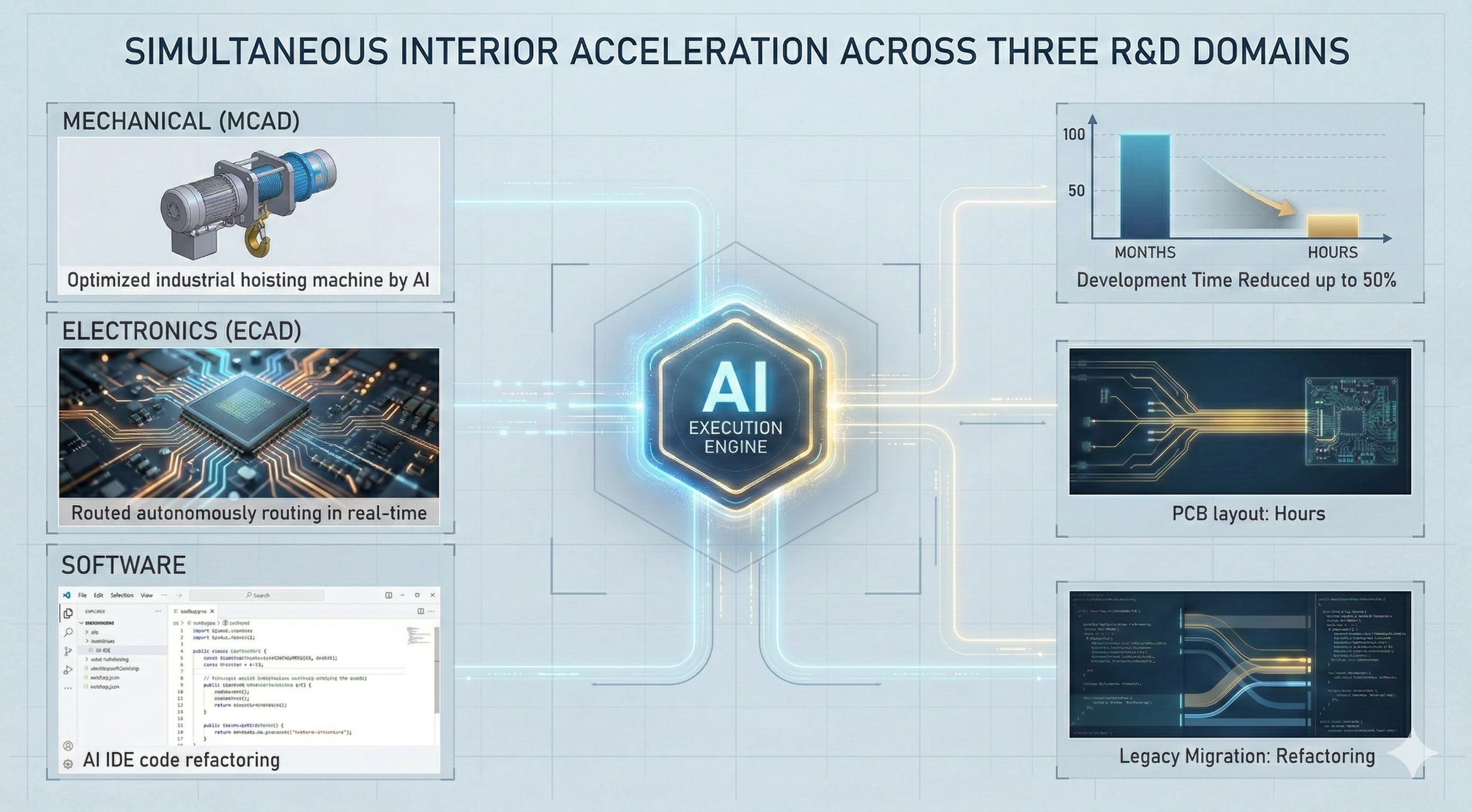
Mechanical (MCAD): AI is shifting mechanical design from 'sketching and checking' to 'constraining and generating.' By utilizing generative tools like Autodesk Fusion 360, PTC Creo, or nTop... a likely 30% decrease in development time, as AI filters out unviable concepts before they reach the simulation or prototyping stage.
Electronics (ECAD): We can leverage “physics-first” AI like Quilter for autonomous PCB layout. It doesn’t just copy human patterns; it solves for signal integrity and thermodynamics. A potential risk to manage here is ensuring that AI-generated layouts remain serviceable by human technicians in the field.
Software: AI-first environments like Cursor or GitHub Copilot are now the standard for managing legacy refactoring. They don’t just write code; they act as the “connective tissue” between old logic and modern architectures.
Use Case 3: Enterprise Knowledge & Project Assistance
Beyond the drawing board, AI is now the interface for historical enterprise intelligence.
Institutional Memory Search: LLMs now allow non-technical members to query decades of “dark data”—PDFs, call transcripts, and legacy logs. A possible hurdle is the initial data-cleaning phase, but once indexed, the outcome is a searchable asset that prevents “reinventing the wheel.”
Prescriptive Project Intelligence: AI engines can provide Real-Time Project Health Scoring. By running “what-if” simulations, a manager might catch a missed milestone before it happens.
Automated Modernization: For 20-year lifecycles, AI can interpret legacy codebases, refactoring logic in a fraction of the time. This is not just about speed; it’s about long-term viability.
The Architect’s Mindset
If you are an R&D leader, you are no longer a “Taskmaster” of people; you are an Architect of Value. Your job is to manage the interfaces—technical, organizational, and regulatory.
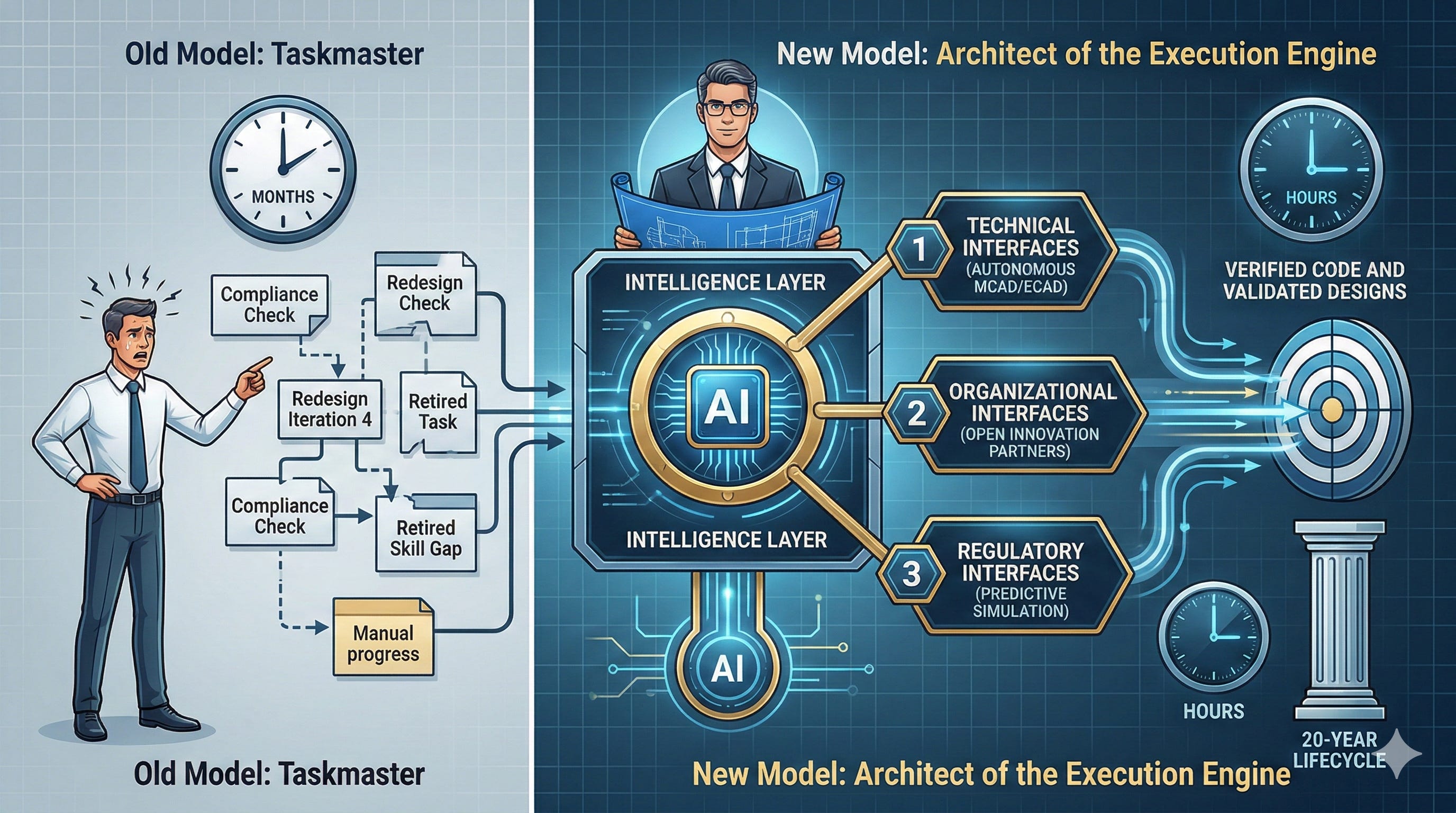
Input: Clear strategic intent and access to legacy data archives.
Process: A “Glass Box” execution engine—AI-enabled simulation and iteration that provides transparent, auditable reasoning.
Output: Rigid quality gates and production-ready designs that pass a strict Definition of Done.
The New Frontier: Nuance & Reality
As we integrate these “Execution Engines,” the industrial landscape will inevitably shift. The competitive advantage is moving away from the sheer capacity to “do the work” and toward the high-level ability to define the right constraints. > While development cycles may shrink, we must anticipate a possible period of “Calibration Latency”—where verification scales up to match the speed of automated output. The goal is not to remove the human from the loop, but to elevate the engineer from a manual debugger to a strategic architect. In 2026, the most successful R&D organizations won’t just be the ones with the fastest AI; they will be the ones with the clearest intent.
The Fast Path is open. It’s time to stop managing the "oops" and start engineering the future.